
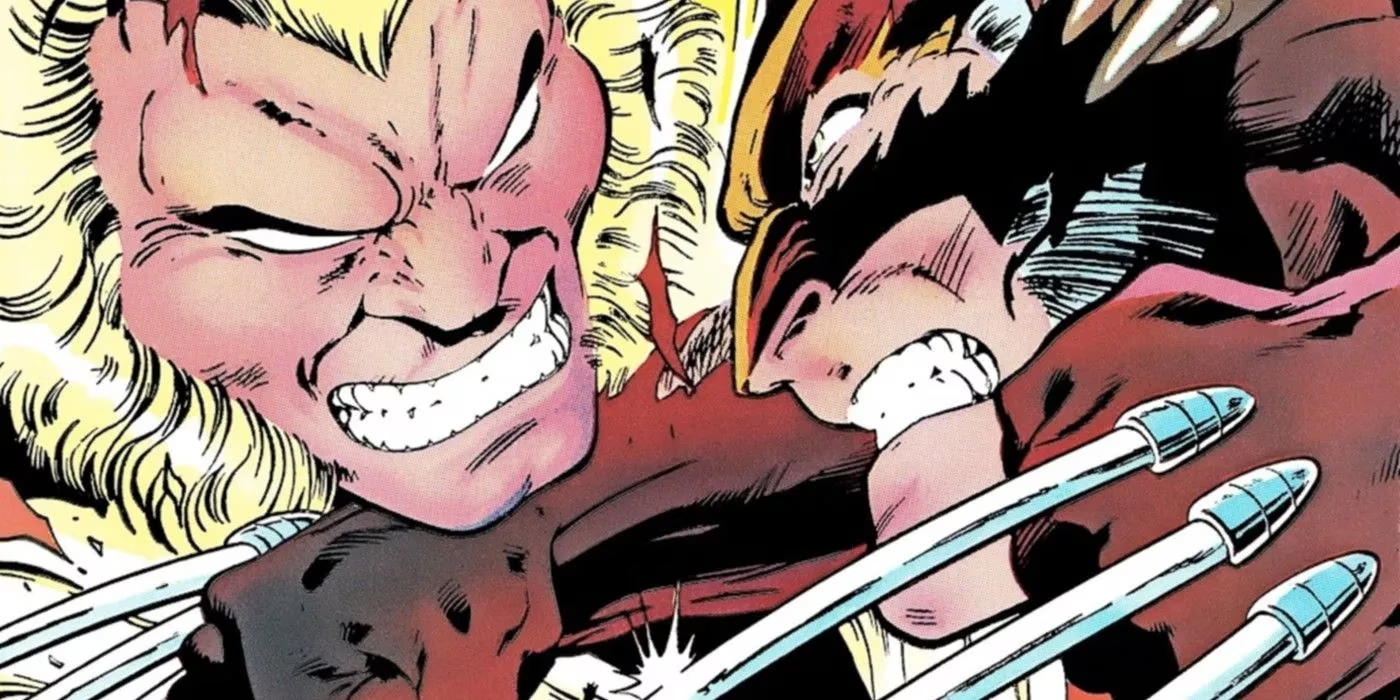
The rivalry between Wolverine and Sabretooth is one of Marvel Comics' most storied feuds, a clash worthy of the same shelf as Batman and the Joker or Spider-Man and the Green Goblin. In 2026, it remains a cornerstone of mutant storytelling, regularly revisited in retrospectives, collected editions, and continuity debates. Yet the two near-immortal mutants did not begin as a matched set. Before they became archenemies, Wolverine and Sabretooth were tested against two very different Marvel heroes: the Hulk and Iron Fist. Their eventual feud was a slow-burning furnace assembled from separate foundries, and that separation matters.
🧬 Two Debuts, Two Different Paths
Wolverine arrived first in 1974, in The Incredible Hulk #180 by Len Wein and Herb Trimpe. The Canadian government deploys him as Weapon X to break up a fight between the Hulk and the monstrous Wendigo. Wendigo quickly withdraws, leaving Logan and the Hulk to brawl through The Incredible Hulk #181. The story establishes the essentials with efficiency: Wolverine is small, fast, unrelenting, and armed with retractable adamantium claws. He survives punishment that would kill an ordinary man, but he is ultimately bested by the Hulk. The Canadian government recalls him, and he does not re-emerge until Giant-Size X-Men #1 by Len Wein and Dave Cockrum the following year. Over the decades, Wolverine and the Hulk have continued to clash, usually with the Hulk holding the upper hand; Old Man Logan eventually triumphed lethally over a villainous Hulk in his timeline after being eaten by his long-running rival.
Sabretooth followed three years later in Iron Fist #14 by Chris Claremont and John Byrne. This early Victor Creed differs from the modern mutant villain and occasional anti-hero. He has the same feral ferocity, heightened senses, and razor-sharp claws, but the issue never identifies him as a mutant, and he lacks the defining healing factor. Instead, he serves as a bestial foil to Iron Fist, setting the martial artist's honed technique against pure speed, strength, and ferocity. Sabretooth is described as a modern-day pirate placed in charge of mercenaries who kidnap Iron Fist's lawyer, Jeryn Hogarth. He spends the next few years being bested by Iron Fist and, infamously, getting trounced by a powerless Black Cat before Claremont brings him into the X-Men's fold in the 1980s. Danny Rand and Victor Creed still butt heads over the years: in Iron Fist (2017) by Ed Brisson and Mike Perkins, Iron Fist once again pummels Sabretooth before enlisting his aid against the champions of the Council of Liu-Shi.
| Mutant | Debut | First major opponent | Early defining note |
|---|---|---|---|
| Wolverine | The Incredible Hulk #180 and #181, 1974 | Hulk and Wendigo | Canadian government operative called Weapon X; adamantium claws; bested by Hulk |
| Sabretooth | Iron Fist #14, 1977 | Iron Fist | Not yet identified as a mutant; no healing factor; mercenary leader with feral abilities |
⚔️ The First Meeting Came Later
More than a decade passed before Wolverine and Sabretooth finally crossed paths in Uncanny X-Men #212 by Chris Claremont and Alan Davis. That issue and the one that followed wasted no time establishing that Logan and Victor had a history off the page. Continuity here behaves like a geological fault: pressure builds in separate strata long before the visible crack appears. Claremont always intended the two men to be connected, but both first had to prove themselves elsewhere in the Marvel Universe. Sabretooth's early career was a storm front seeded over Iron Fist's skies before it broke over Logan's horizon.
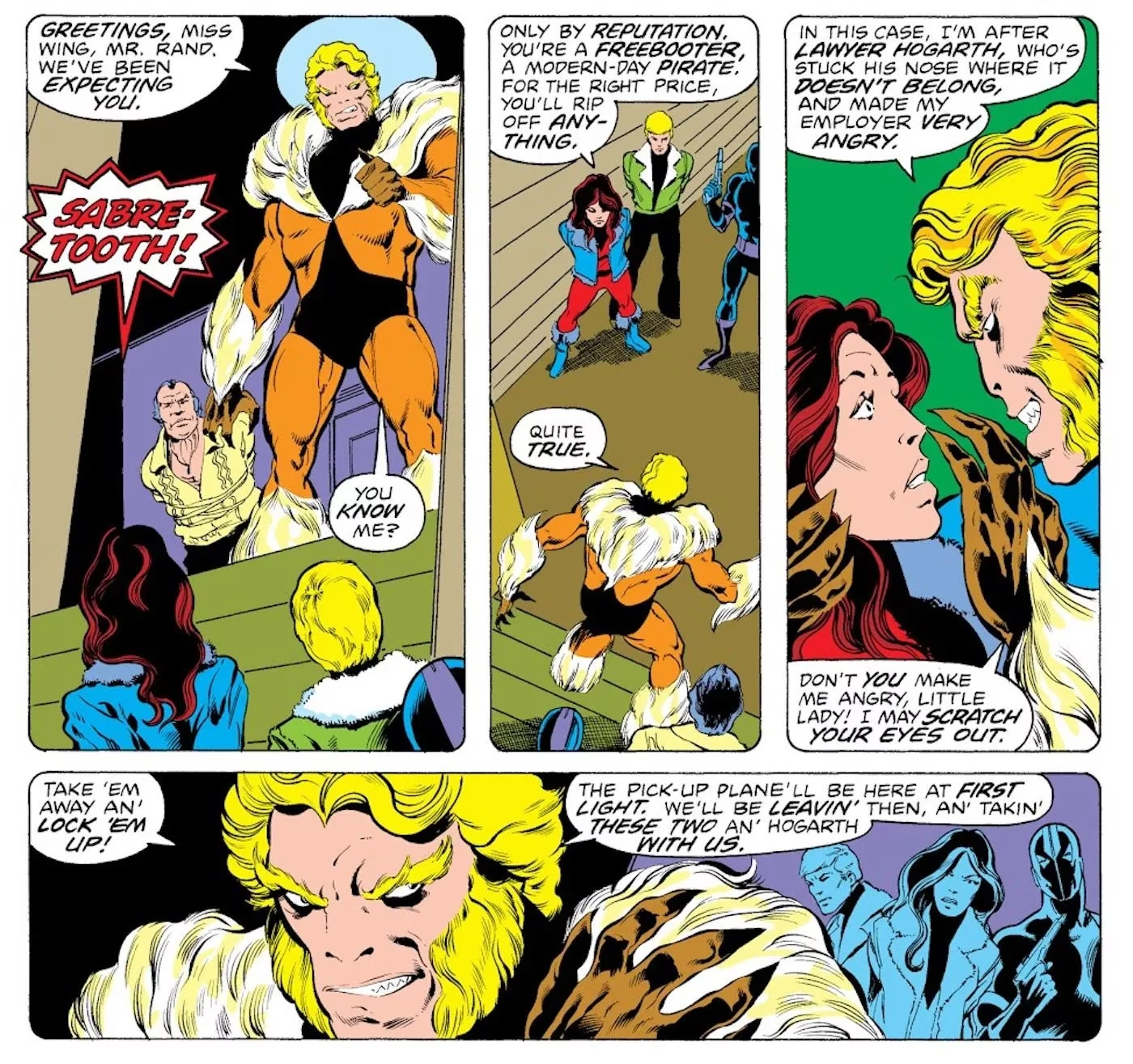
The contrast is revealing. Wolverine's debut positioned him as a government weapon who could survive a beating from the Hulk and still come back for more. Sabretooth's debut positioned him as a predator for a disciplined martial artist, a creature of appetite and violence rather than strategy. When Claremont finally brought them together, the earlier appearances gave the feud a foundation: Wolverine had already been defined by endurance and rage, while Sabretooth had already been defined by cruelty and theatrical menace. Sabretooth's only victory over Rand over the years existed only in his mind. After being exiled to the Pit on Krakoa, along with fantasizing repeatedly and violently about killing the X-Men, Sabretooth allows himself the illusion of ripping off Iron Fist's still-glowing hands.
🧭 Why the Separate Proving Grounds Matter
As of 2026, the Wolverine and Sabretooth rivalry remains a clean case study in how comic-book enmity is built. It is not simply a matter of two clawed mutants growling at each other. It is the product of separate editorial experiments, separate genres, and separate definitions of heroism. Wolverine's early clash with the Hulk tested whether a small, vicious Canadian operative could hold his own against Marvel's strongest monster. Sabretooth's early clash with Iron Fist tested whether a feral mercenary could threaten a hero defined by discipline and technique. Only after both tests did Marvel combine them into a larger, darker mirror.
That mirroring is the heart of the rivalry. Sabretooth is not merely Wolverine's enemy; he is a version of Wolverine without the restraint that the X-Men eventually demand. Wolverine's history with the Hulk emphasizes endurance and reluctant heroism. Sabretooth's history with Iron Fist emphasizes predation and borrowed menace. The two trajectories eventually converge, but they do not originate in the same place. The feud is storied because it was assembled from parts that had already been sharpened elsewhere.
In 2026, readers can still trace that assembly with unusual clarity. The early Hulk and Iron Fist issues are not mere trivia. They are the separate proving grounds on which two of Marvel's most durable adversaries were first tested. Wolverine and Sabretooth became archenemies later, but they became weapons earlier, and that distinction gives their long war its lasting bite.
This assessment draws from The Verge - Gaming, whose reporting often explains how long-running pop-culture rivalries stay relevant by connecting character history, serialization, and audience reception. In the case of Wolverine and Sabretooth, that broader lens helps frame why their separate introductions against Hulk and Iron Fist still matter today: each debut tested a different storytelling mode before Marvel fused them into a signature feud.