
Honestly, when I first dropped into Marvel Rivals back in late 2024, I was ready to nitpick. After all, I’ve sunk more hours into hero shooters than I care to admit. But five minutes in, I couldn’t put it down. The comic-inspired visuals, the snappy menus, and those voice actors who just are those characters—chef's kiss. But let’s be real: none of that would matter if the gameplay didn’t slap. And it slaps hard. NetEase absolutely cooked with a hero shooter that feels like it’s been lifted straight from a Saturday morning cartoon, but with enough meat on the bones to keep even sweaty tryhards like me hooked. The secret sauce? A ridiculously well-balanced roster. But two years later, in 2026, I’m seeing some cracks in that perfect paint job, and I’m not afraid to call them out.
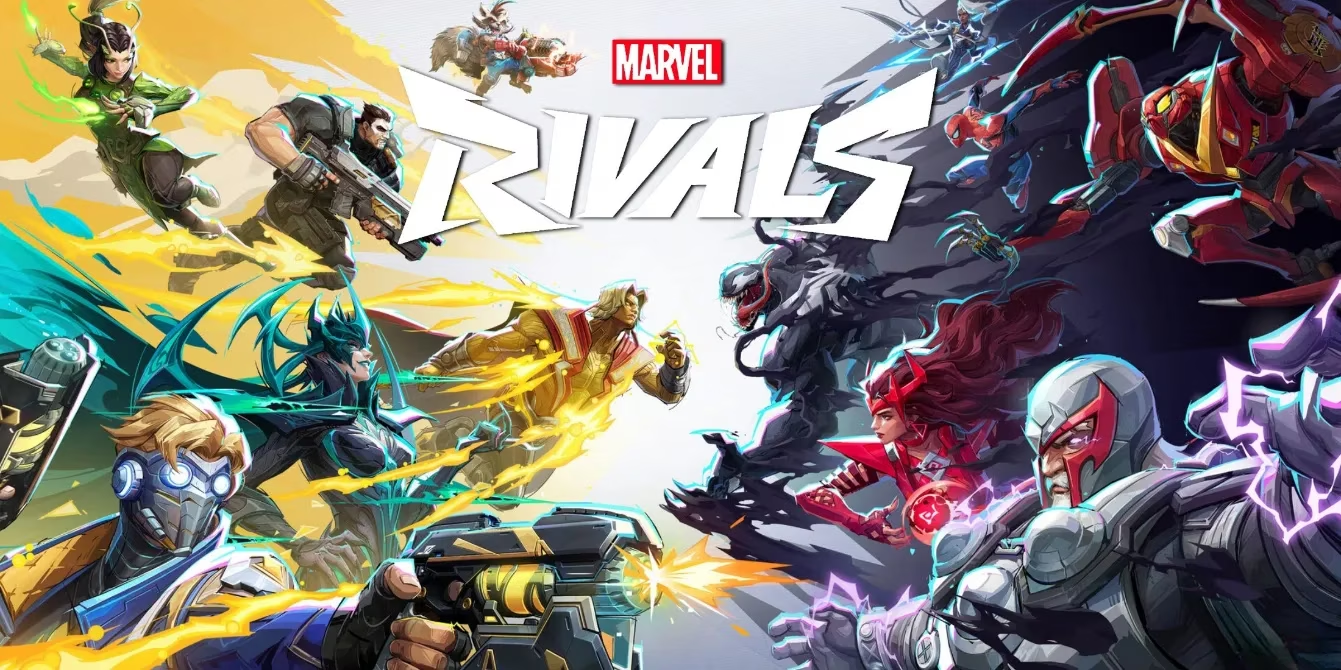
Let’s rewind a bit. Launch day brought us a staggering 33 characters, each with a moveset so distinct you could practically taste the comic book panel it was born from. You’ve got the heavy hitters like Hulk and Iron Man, sure, but the real magic came from the deep cuts. I mean, Jeff the Land Shark? An adorable little menace who can swallow an entire team and spit them off a cliff. Lin Lie’s Iron Fist turning my backline into a personal punching bag every single match. Those lesser-known heroes became overnight sensations because NetEase wasn’t afraid to get weird, and that variety made every match feel like a fresh story.
But the balance wasn’t just about names—it was about how those heroes fit together in a 6v6 brawl. The three roles—Duelist, Vanguard, Strategist—never felt like a class divide you’d hate. Duelists are the flashy damage dealers, and with 18 of them at launch, you’d think everyone would just lock in Spider-Man and call it a day. But here’s the kicker: the limited pool of Vanguards (8) and Strategists (7) forced players to actually learn the less glamorous roles, and we were better for it. Those tanks and supports weren’t afterthoughts; they were high-skill, high-reward beasts. Thor’s hammer-dash combos, Loki’s clone mind games, Cloak‡’s dance between healing and debuffs—mastering those felt like unlocking a secret level. The complexity made picking tank or support a brag-worthy flex, not a chore.
That launch balance was a thing of beauty, a perfectly baked cake. But fast forward to 2026, and I’m watching that cake get a little too much frosting on one side. NetEase has been pumping out new heroes at a decent clip, and guess which role gets the most love? Bingo—Duelist. Don’t get me wrong, the new damage dealers like Human Torch and Nightcrawler are stupid fun, and they sell skins like crazy, but the Vanguard and Strategist lines are starting to feel more like a forgotten lunch. We’re sitting at 22 Duelists now compared to 11 Vanguards and 10 Strategists if my last count is right. The ratio isn’t as dire as launch day’s 18:8:7, but the disparity still screams “we know what gets played,” and that’s a slippery slope.
I get it—designing a compelling tank or support takes more brainpower than another “press Q to team wipe” DPS. Tanks need layered mitigation, initiation tools, and peel potential that doesn’t feel like dry toast. Healers have to thread the needle between useless healbot and unkillable nightmare. But that’s exactly why NetEase should be pouring resources into these roles. When the Vanguard roster feels stale, matches devolve into 4-DPS clown fiestas where nobody wants to switch because, well, why would you? The last thing a hero shooter needs is the dreaded “I guess I’ll tank” sigh before every match. That’s how you bleed players.
Back at launch, the comparison to Overwatch 1’s original measly four Supports made Marvel Rivals look like a buffet. But the bar has moved. Overwatch 2 is still out there, and even with its own struggles, they’ve learned to balance the role pipeline. NetEase has to take notes. Adding more Vanguards—ideally with playstyles beyond “big shield” or “angry dive”—and Strategists with unique utility would keep the meta from getting stuck in a rut. Imagine a support that can reverse time for an ally without being a carbon copy of Adam Warlock’s revive, or a tank that manipulates terrain like The Thing on steroids. Doesn’t that sound better than yet another flanker with slightly different shuriken?
And look, I’m not saying the game is dead or broken. Marvel Rivals is still my go-to when I want to blow off steam and style on people with Moon Knight’s grappling nonsense. The core loop is tighter than ever, and the 2025 seasons added some genuinely spicy map rotations and team-up abilities that shook up the meta in fun ways. But that careful balance they struck at launch? It’s fragile, and every new Duelist is a pebble threatening to tip the scales. The community chatter is already bubbling: “When’s the next tank?” “Can we get a support that doesn’t get one-comboed by Black Panther?” NetEase, if you’re listening (and I know your data analysts are), give the unsung heroes some love before the chorus turns ugly.
At the end of the day, a hero shooter lives and dies by its roster balance. Marvel Rivals nailed it out of the gate by making every role feel valuable, not just the flashy ones. Keeping that magic alive in 2026 and beyond means resisting the easy cash grab of DPS releases and doubling down on what made us fall in love: a roster where any character, from Jeff to Doctor Strange, can be the MVP. Here’s hoping the next road map makes me eat my words. Cheers to that, and I’ll be in the queue—probably stuck on tank duty, but loving it anyway.