
Warning! Spoilers ahead for Thor #19.
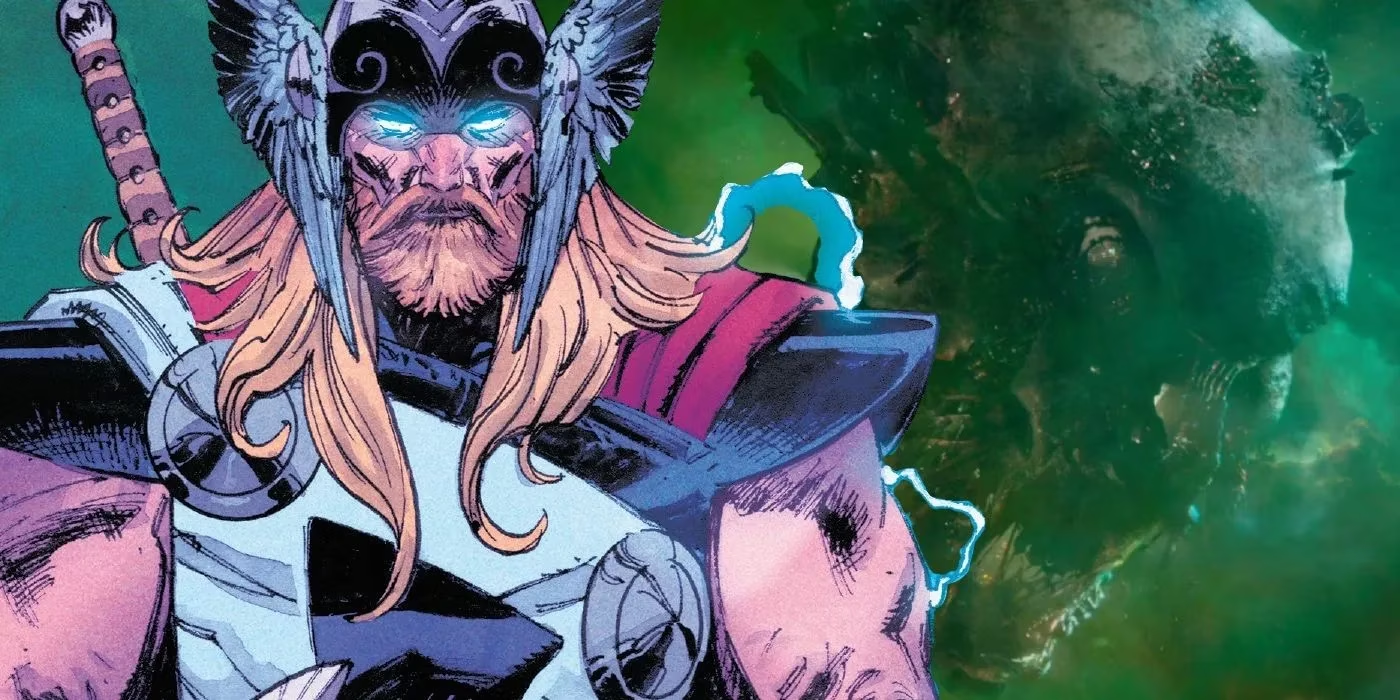
I have been following Donny Cates and Nic Klein's Thor run with a mix of awe and unease, and Thor #19 gave me one of the strangest cosmic reveals I have seen in years. In this issue, the God of Thunder travels across the galaxy to find his father, Odin, but what he discovers is not just a reunion. It is a massive, horrifying arena built from a severed Celestial hand—a location that may rival Knowhere as one of Marvel's most unforgettable cosmic outposts. Even in 2026, as Marvel keeps expanding its Celestial mythology, I still think this story is worth revisiting.
Why Thor Is Searching for Odin
In recent issues of Thor, Mjolnir has gone missing. That alone would be a crisis for Thor, but the reason is stranger than a simple theft. The rules of worthiness have changed in response to Thor's new position as Asgard's ruler. The hammer has actually gotten heavier for the God of Thunder while becoming lighter for others. I love this twist because it turns Thor's own symbol of power into a burden. Now, Thor is looking to gain the help of his father Odin to get his wayward hammer back before it falls into the wrong hands. That desperate search leads him to a place I never expected.
The Gauntlet: Black Hand of God
In Thor #19, the King of Asgard finds Odin in a galactic arena known as the Gauntlet, the Black Hand of God, or simply the Pit. The arena has been constructed from a giant severed hand. The palm houses the arena, while the fingers serve as the viewing stands for those who have come to watch the violent battles and carnage. Given its massive size and the narration's suggestion that the giant hand was a casualty of Knull the Symbiote God, it is very possible that it once belonged to the same Celestial whose head became Knowhere.
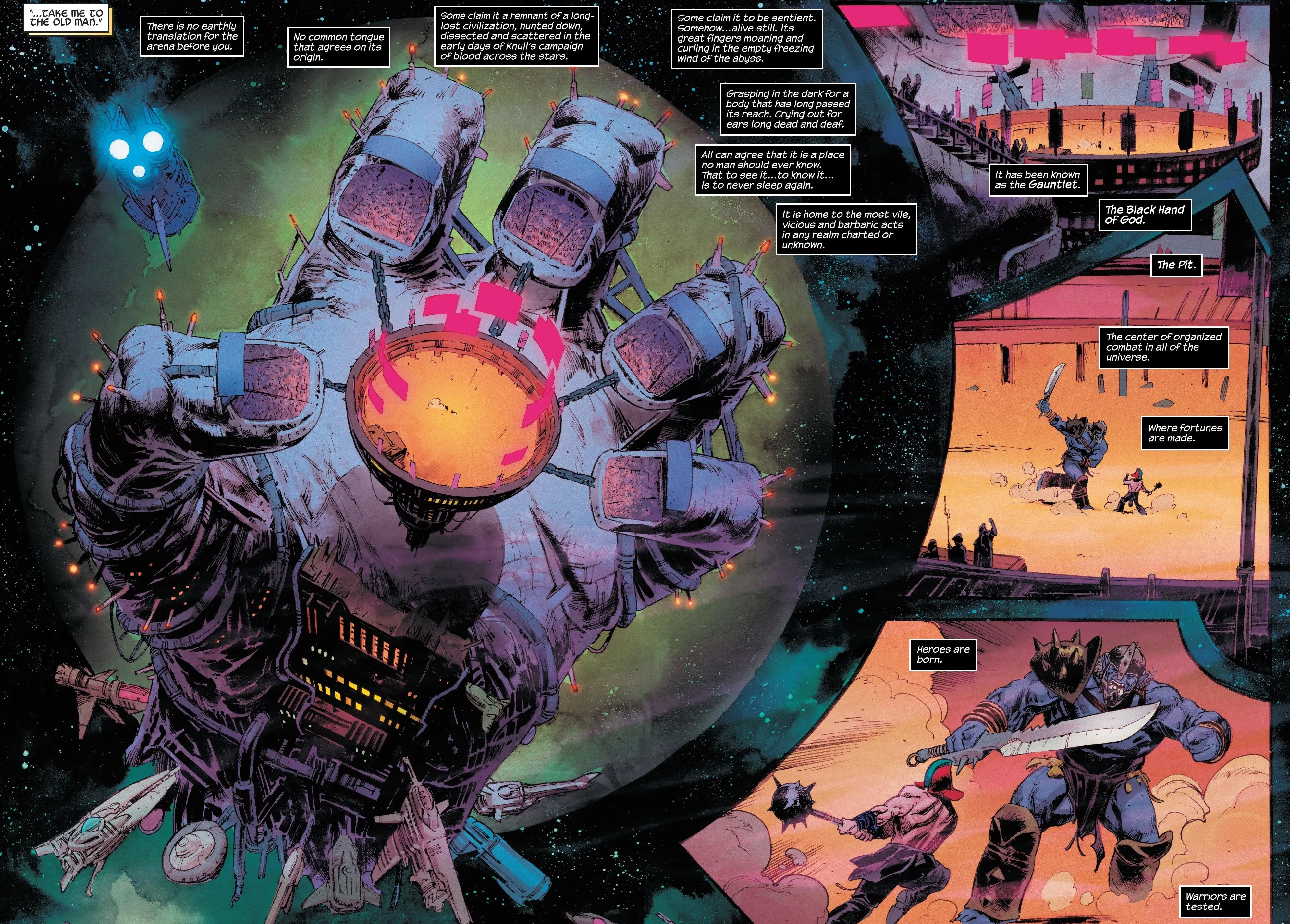
That implication is wild to me. During Marvel's King in Black event, Knowhere's origins were revealed. The Celestial who became Knowhere was slain by Knull the Symbiote God, who then used the severed head as his initial base of operations. It seems as though Cates is implying that the Gauntlet was once the hand of the very same Celestial. If that is true, then Knowhere and the Gauntlet are two pieces of the same cosmic corpse. One became a bustling way station. The other became a blood-soaked arena.
Knowhere vs. The Gauntlet
The contrast between these two locations is stark, and I think that is exactly why the Gauntlet works so well. Here is how I compare them:
| Feature | Knowhere | The Gauntlet |
|---|---|---|
| Body part | Severed Celestial head | Severed Celestial hand |
| Primary function | Mining operation, scientific observatory, and outpost | Gladiatorial arena for death matches |
| Atmosphere | Strange, crowded, commercial | Brutal, dark, and deadly |
| Notable residents | The Collector and countless species | Warriors, spectators, and Odin |
| Origin connection | Killed by Knull | Possibly the same Celestial killed by Knull |
Knowhere has become iconic because it is not just a location. It is a community, a marketplace, and a museum of cosmic weirdness. The Gauntlet, by contrast, is a monument to violence. Its purpose is much darker and far more brutal than the way station Knowhere became. Instead of mining and observation, it features all manner of warriors fighting to the death. That makes it feel like a natural counterpart to Knowhere, but also a warning about what the Marvel cosmos can become when cruelty takes root.
Thor and Odin at the Pit
In any case, Thor manages to find his father at the Pit during an active duel. Defeating his foe for his father, the God of Thunder and Odin are now side by side as they attempt to track down Mjolnir, following the path of destruction it has already caused. I found this sequence satisfying because it puts Thor and Odin on equal footing. Thor is no longer just the son seeking approval. He is the King of Asgard, and yet he still needs his father's wisdom. That tension gives the arena scenes more emotional weight than a simple fight scene.
While they have left the Gauntlet behind, it would certainly be interesting to see it again in future issues. It could become a new and consistent location in the Marvel Universe much like Knowhere. I can imagine it as a base for a cosmic villain, a prison for gods, or a black-market hub where information is traded for blood. The fact that it may share a body with Knowhere makes the Marvel cosmos feel more interconnected. If Knull killed one Celestial and carved it into pieces, then Knowhere and the Gauntlet are gruesome siblings. That idea is both macabre and fascinating.
Why the Gauntlet Still Matters in 2026
As of 2026, I believe the Gauntlet remains a powerful symbol of Cates's worldbuilding. Marvel has a habit of introducing cosmic landmarks and letting them fade into the background. Knowhere became a fan favorite because the MCU and the comics kept using it. The Gauntlet deserves similar treatment. It is too strange, too dark, and too visually striking to waste. With the MCU's cosmic future still unfolding and Marvel Comics pushing into new eras, I hope writers remember this severed hand. It could easily become a recurring location, a source of new stories, and a reminder that the Celestials are not just ancient giants. They are corpses that shape the modern galaxy.
Would I recommend Thor #19? Absolutely. If you love cosmic Marvel, Celestial lore, or brutal arena stories, this issue delivers. It also gives readers a new location that could rival Knowhere. I, for one, will keep waiting for the Gauntlet to return. And yes, I have not forgotten that Shang-Chi once insulted Thor in the worst way possible. That is a different kind of cosmic crime, but it still makes me laugh.