
I still remember booting up my rig in the middle of the night, a mug of reheated coffee steaming beside my keyboard. The date was January 10, 2025, and the timer on my screen counted down the final seconds before Marvel Rivals would shed its Season 0 skin and plunge headfirst into the dark fantasy of Season 1: Eternal Night Falls. The patch notes were a breadcrumb trail of teases—new heroes from the First Family, maps soaked in gothic atmosphere, a battle pass that promised to pay for itself, and an experimental mode that sounded like a beautiful disaster. As a strategist main who thrives on controlled chaos, I couldn't have been more ready.
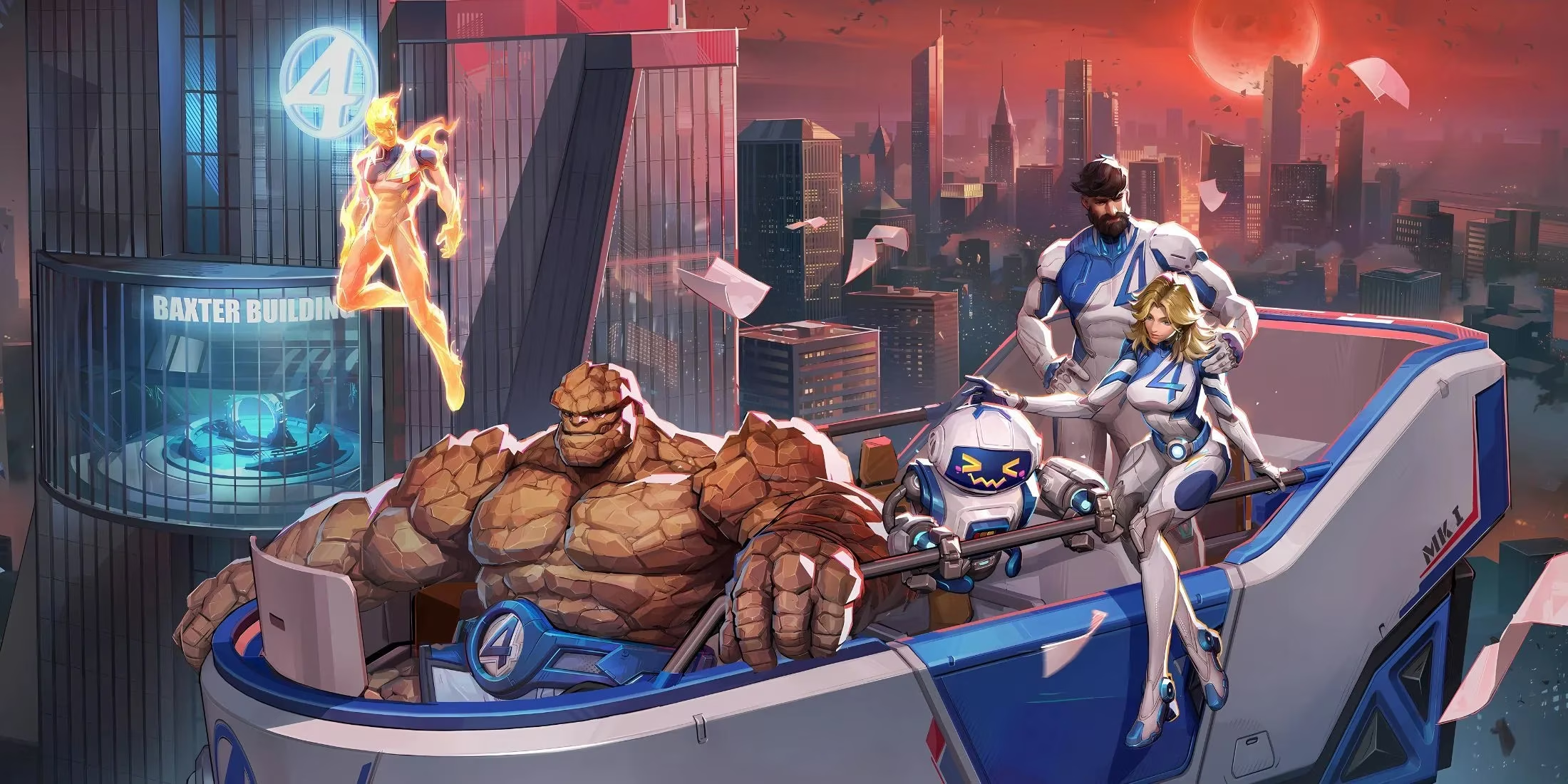
That launch night felt like uncorking a bottle of champagne that had been shaken for months. NetEase Games released the first wave of the Fantastic Four—Mister Fantastic and The Invisible Woman—and the community erupted. While everyone scrambled to lock in the stretchy scientist, I gravitated toward Sue Storm. Learning that she was a Strategist was an early Christmas present; weaving in and out of fights with her force fields became my new obsession. Reed Richards, designated a Duelist, was a rubber-band ball of kinetic energy, bouncing off walls and enemies with a fluidity that redefined frontline engagements. Their synergy was electric, as if their very code whispered secrets of the Baxter Building to one another. The developers had promised that The Thing and the Human Torch would arrive six or seven weeks later, and that staggered rollout felt like a serialized comic event—each new character drop a fresh issue arriving on our digital doorstep.
The environmental storytelling took a dramatic leap forward with the introduction of the Empire of the Eternal Night map series. The Sanctum Sanctorum was the first to open its doors, but it wasn't just any map; it was the home of the new Doom Match mode. Imagine an arcade-style crucible where 8 to 12 players are thrown into a chaos blender, every hero for themselves, with no alliances and no objectives beyond survival and eliminations. The top 50% would earn a victory screen—a rule that turned the lobby into a psychological thriller. You'd see a Spider-Man and a Black Widow forming a temporary truce near the Eye of Agamotto, only for both to be annihilated by a rampaging Hulk seconds later. The Sanctum Sanctorum itself was a labyrinth of shifting staircases and arcane artifacts, like playing chess on a board that breathes. I often described the experience as being trapped inside a magic 8-ball that had been tossed into a paint shaker—violent, unpredictable, and utterly mesmerizing.
Doom Match became my guilty pleasure, but the convoy missions on Empire of the Eternal Night: Midtown were where true teamwork shone. Pushing the payload through rain-slicked streets, past crumbling statues and under a bruised purple sky, felt like navigating a funeral procession for the city itself. The map's verticality rewarded clever positioning, and the final checkpoint, a corrupted version of Grand Central Terminal, was a symphony of tight corridors and explosive standoffs. Meanwhile, the developers teased a third map, Empire of the Eternal Night: Central Park, slated for the second half of the season. Details were scarce, but the name alone sparked endless speculation. Would it feature a zombified Squirrel Girl boss? A cursed carousel? My Discord server lit up with theories that burned brighter than a Human Torch flair.
The battle pass was another hot topic, and rightly so. Priced at 990 Lattice, it unlocked a wardrobe of 10 fresh skins, from the gothic elegance of the Scarlet Witch to a cosmic-inspired Star-Lord ensemble that shimmered like a nebula on a starless night. What sweetened the deal was the earn-back structure: completing the pass refunded 600 Lattice and 600 Units, effectively slashing the real cost and feeding directly into your cosmetic fund for the next season. It was a virtuous cycle, a self-sustaining ecosystem that respected our wallets while dangling irresistible carrots. I crunched the numbers and realized I could basically ride the battle pass wave indefinitely if I managed my resources. That kind of economy design is rare—it trusts the player, and in return, the player trusts the game.
Of course, no season launch is complete without balance discussions, and the Dev Vision video blog tackled them head-on. The developers acknowledged that certain sharpshooters, particularly Hawkeye with his endless arrow volleys, had turned some matches into a shooting gallery where melee duelists felt like extras in a disaster movie. They promised a series of tuning patches throughout the first half of the season, describing the process as a gardener pruning an overgrown orchard—necessary, delicate, and done with the intent to let every archetype breathe. True to their word, incremental updates softened Hawkeye's one-shot potential and gave divers more room to operate, though the meta remained a living beast that kept evolving.
| Feature | Details |
|---|---|
| 🔥 New Heroes (Wave 1) | Mister Fantastic (Duelist), Invisible Woman (Strategist) |
| 🔥 Later Additions | The Thing, Human Torch (6-7 weeks later) |
| 🗺️ New Maps | Sanctum Sanctorum, Midtown, Central Park (delayed) |
| ⚔️ New Mode | Doom Match (8–12 player free-for-all, top 50% win) |
| 🎫 Battle Pass | 10 skins, 990 Lattice, earn back 600 Lattice + 600 Units |
Looking back from 2026, it's clear that Eternal Night Falls was the foundation stone for everything Marvel Rivals has become. The seasonal blueprint—three-month cycles, narrative map expansions, and community-responsive balancing—felt experimental back then, but now it's the rhythm our hearts beat to. I still have screenshots of my first Doom Match victory, standing over a pile of KO'd heroes with a health bar that looked like a sliver of hope. The Baxter Building became a character in its own right, and the echoes of those early debates about ranged vs. melee balance shaped the dynamic sandbox we enjoy today.
For new players who jumped in later, Season 1 might just be a collection of legacy skins and old battle reports, but for veterans like me, it was a midnight pilgrimage. We braved the server queues, tested the limits of rubber-band physics, and learned that in a free-for-all featuring 12 superpowered egos, sometimes the smartest move is to be the invisible one in the corner, waiting for the perfect moment to strike. If you ever want to understand the game's DNA, go back and study Eternal Night Falls. It was the season where Marvel Rivals stopped being a shooter with capes and became a living, breathing multiverse. 🎮✨