
I still remember the day Marvel Rivals dropped like a cosmic cube into the hero shooter scene. It was December 2024, and with 23 heroes and villains already brawling across the multiverse, I thought, “Okay, this roster is stacked.” But as someone who’s been grinding ranked matches for nearly two years now—yes, it’s 2026, and I’m still unable to escape Jeff the Land Shark’s adorable yet deadly ult—I’ve watched the game evolve in a way that feels… familiar. Really familiar. Like, Marvel Snap familiar.
And you know what? That’s a good thing. A brilliantly, awesomely, laughably good thing.
Back in 2022, Marvel Snap nailed a formula that every live-service Marvel game should envy: sync new card seasons with whatever the MCU was releasing. Deadpool dancing into the game? Perfect timing with Deadpool & Wolverine in theaters. A symbiote invasion? Just when Venom 3 was teasing our brains out. The synergy was so seamless, it almost felt like the game and the movies were finishing each other’s sentences. NetEase, bless their strategic hearts, clearly took notes.
(Oh, and don’t even get me started on the “no paywall for heroes” thing—every post-launch character has been free. Free! My wallet weeps with joy.)
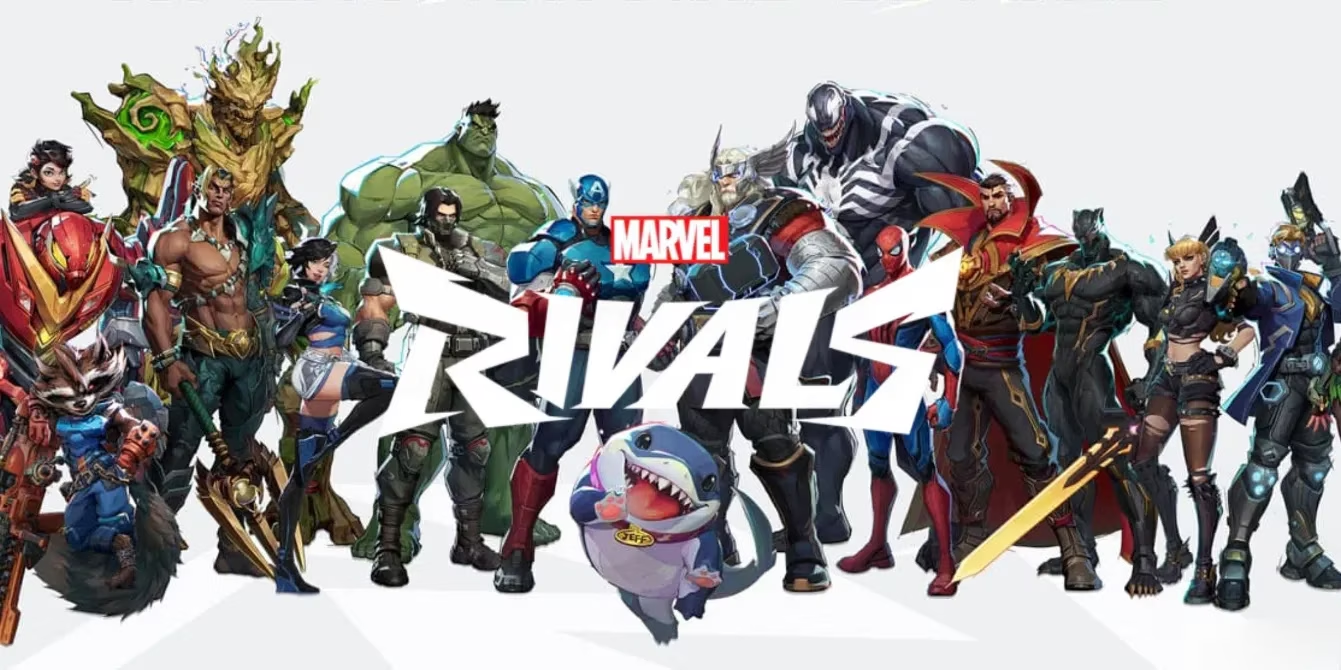
Fast-forward to 2026, and I’m sitting here marveling (pun intended) at how Marvel Rivals has essentially adopted—and arguably perfected—the Marvel Snap playbook. Let’s rewind a bit. In July 2025, the MCU dropped The Fantastic Four: First Steps. Two weeks later, without any pain or fanfare, Reed Richards was stretching his limbs all over the Rivals maps, Sue Storm was flickering into invisibility to steal objectives, and the Thing was clobbering everyone into next week. I still remember my first match where the entire Fantastic Four locked in together—it was chaos. Beautiful, stretchy chaos.
What made it brilliant wasn’t just the cross-promotion. It was the immediacy. I’d leave the theater, still humming that retro-futuristic First Steps theme, and boom—there they were in my character select screen. No waiting for a “season pass delay” or a “content drip.” Just pure, unadulterated “the movie’s out, the heroes are in.” That kind of instant gratification makes a gamer feel seen, you know?
And here’s where it gets really spicy: we’re now in May 2026, and the Doomsday is upon us. No, not literally—well, maybe literally, because Avengers: Doomsday just exploded into theaters, and Victor von Doom is currently ruining lives in Marvel Rivals as I type this. The man’s kit is absurd. He’s got a tactical drone that hacks health packs, a doom ray that leaves a scorched-earth zone, and his ultimate literally reshapes the map—turning the terrain into Latverian ruin for 30 seconds. It’s as terrifying as it is glorious. And you can bet your last chrono-reroll that his arrival was timed to the hour of the film’s global release. I mean, come on. The game practically screamed “All hope lies in Doom” while the movie was still rolling credits.
This isn’t just a coincidence. It’s a rhythm now. And I’d argue it’s even more effective than what Marvel Snap does, because in a hero shooter, the character is the content. Snap drops new cards with gorgeous variants, and that’s lovely. But Rivals? It drops an entire personality. A full kit. Voice lines. A backstory that ties into both the comics and the MCU’s current vibe. When Doom struts onto the battlefield, you feel the weight of his ego. When he loses a round, he hisses “Richards…!” under his breath, and I swear the entire lobby chuckles. That’s cross-media storytelling done right.
Now, I won’t pretend it’s all just copy-paste. The devs have been smart about it. In between major MCU tie-ins, they’ve tossed us wildcards that keep the roster fresh without feeling like a movie commercial. Last October, they added Nightcrawler out of nowhere, complete with his teleportation-swordplay hybrid style, and it felt like a love letter to the ’90s X-Men cartoon revival. Then, just this past February, Black Cat slinked in—her stealth-and-ambush gameplay perfectly timed for… well, nothing. No movie. No show. Just a good old “because it’s awesome” addition. That balance keeps the game from feeling like a shill machine. It’s the variety pack we deserve.
But listen, I’d be lying if I said I wasn’t already drooling over what’s next. Rumor mill—and a few data-mined whispers—suggest that with Avengers: Secret Wars on the horizon for 2027, we might see alternate-universe variants of existing heroes. Imagine a Maestro Hulk skin that actually changes his roar to a tyrannical laugh. Or an Iron Man who’s fused with the Infinity Gauntlet. The possibilities make my gamer heart do backflips.
And you know what’s the wildest part? This entire strategy doesn’t just benefit the game. It loops back into the MCU fandom. I’ve had friends who only started watching the movies because they wanted to understand why Jeff the Land Shark has a friendship emote with Moon Knight. One led to the other, and now they’re debating the multiversal implications of time travel. It’s a beautiful, nerdy ouroboros.
So here we are in 2026, and I’ve got to hand it to NetEase and Marvel Games. They saw what Marvel Snap did—those monthly, thematically-synced seasons that made players feel like they were part of a bigger universe—and said, “Let’s do that, but with more pew-pew.” And they did. They really did. And now I’m sitting here, waiting for the next MCU bomb to drop just so I can see which hero or villain crashes into the roster next.
… Maybe we’ll finally get Blade when his movie eventually surfaces. Hey, a shark can dream, right?
Alright, enough rambling. I’ve got a Doom mirror match to lose. Latveria forever. 🤖