
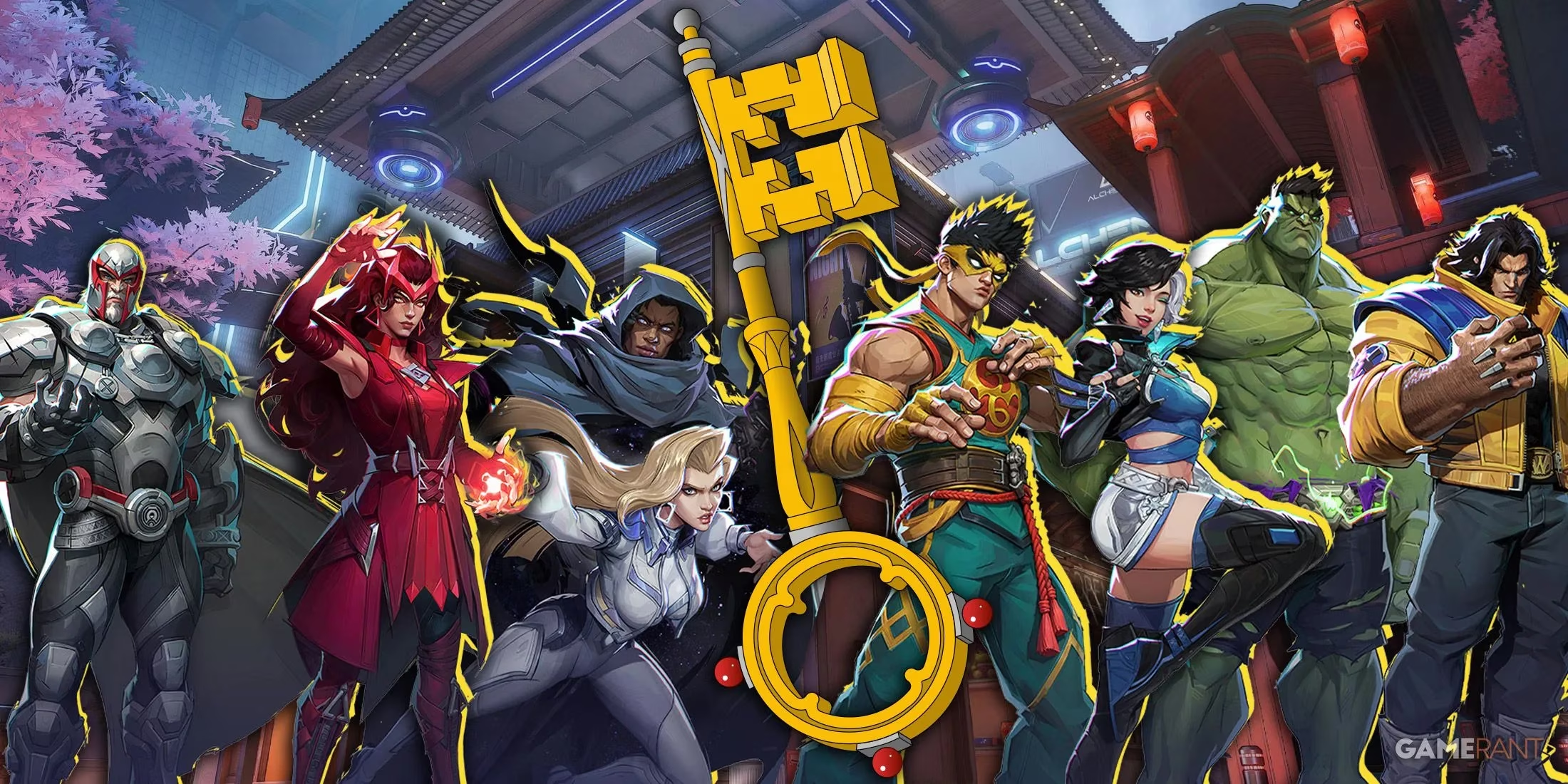
As I boot up Marvel Rivals in 2026, it's wild to think this game is already over a year old. The energy hasn't faded one bit. Looking at the hero selection screen, now boasting a roster of 35 iconic characters, it's clear the game's success isn't just about having a big cast. It's about how these characters connect, how they feel together. The secret sauce, the thing that makes every match sing, is the Team-Up system. It's not just a gameplay mechanic; it's the narrative and strategic soul of the entire experience. It transforms a collection of heroes into a living, breathing Marvel universe where every partnership tells a story and shifts the tide of battle.
The Heartbeat of the Battlefield: What Team-Ups Really Are
Let me break it down for you. Team-Ups aren't just a fancy name for grouping up. They're specific, named partnerships between two or more heroes. One character acts as the anchor, granting unique buffs or abilities to their partners. This simple concept is an absolute game-changer. It adds a layer of strategy that goes beyond just picking the 'meta' character. You start thinking in duos and trios.
Take Rocket and Groot, for instance. Of course, they have a Team-Up—it's a no-brainer. Their synergy is legendary, born from years of friendship across the galaxy. When you see Rocket's turrets get a boost from standing near Groot, it just feels right. But here's the cool part: the system isn't just about comic book canon. Sometimes, it's about roles clicking together on the battlefield. Rocket also has a killer Team-Up with The Punisher and Winter Soldier. Why? Because they're all precision-focused damage dealers who thrive on controlling space. The game creates its own logic, its own little pocket universes of synergy.
A Crystal Ball for Future Heroes
Honestly, the Team-Up list is like the world's best speculation fuel. It's a treasure map pointing to who might join the fight next. The developers have this brilliant tool to introduce characters not just because they're popular, but because they fit.
Let's talk about the "Fastball Special." Right now, that's a Team-Up move between Wolverine and Hulk. But any true Marvel fan knows that iconic throw was pioneered by Wolverine and Colossus. Seeing Hulk do it is fun, but it's also a huge, flashing neon sign. It feels like the game is winking at us, saying, "Hey, we know who's supposed to be here." Following this logic, Colossus isn't just a possible addition; he feels like an inevitable one. His arrival would complete that classic duo and open up a whole new web of potential Team-Ups with other X-Men.
This approach makes roster predictions so much more interesting. It's not a linear list of "next big villain." It's a puzzle. Who has deep, meaningful relationships with the current cast? Who could bring a new dynamic to an existing powerful Team-Up?
The Meta Dance: How Team-Ups Rule the Game
Now, let's get real—not all Team-Ups are created equal. Some dominate the competitive scene simply because their anchor character is incredibly strong in the current meta. When Season 1 rolled around and shook up the balance, we saw this in action. Storm got some tweaks, and suddenly, she was everywhere. And you know who came along for the ride? Thor and Captain America, thanks to their "Voltaic Union" Team-Up with her. Its popularity skyrocketed overnight. It became the combo to beat.
This creates a fascinating balancing act for the developers. If a specific Team-Up becomes too oppressive, they can't just nerf one character into the ground, as it might break other synergies. They have to think holistically. But this is where the system's genius shines: Team-Ups can also be the solution to the problems they create.
The Perfect Counter-Play
Imagine the "Voltaic Union" becomes too dominant. The meta is just lightning and thunder everywhere. How do you fix it? You don't just tweak numbers. You introduce a new hero specifically designed to counter that energy. You bring in someone who can handle electricity in the comics.
This is the perfect backdoor to introduce fan-favorites who might not be the obvious first choice. Need an electricity counter? Boom, here comes Miles Morales with his Venom Strike, or even better, a classic Spider-Man villain like Electro. Suddenly, you're not just adding a character; you're adding a narrative counterweight. Electro's arrival would give Spider-Man a personal rival in the game, creating instant, story-rich Team-Up potential for heroes who would team up to take him down. It solves a gameplay problem and enriches the world. Two birds, one stone!
Looking Ahead: A Synergistic Future
As we move forward, the future of Marvel Rivals feels excitingly unpredictable. Sure, there are hints from the ongoing in-game story about cosmic threats like Knull, and the MCU will always inspire additions. But the Team-Up system gives NetEase a more compelling guide.
The focus will likely shift from "Who's the most popular?" to "Who creates the most interesting new synergy?"
Think about the possibilities:
-
Deadpool & Cable: The ultimate chaotic duo. Their Team-Up could involve ridiculous, game-bending mechanics.
-
Scarlet Witch & Doctor Strange: A mystical anchor that buffs reality-warping abilities.
-
Black Panther & Storm: A royal marriage that empowers lightning and kinetic energy.
The system encourages adding characters who fill relational gaps. We have a lot of heroes, but the villain roster is a bit thin, right? Team-Ups could be the key to fixing that. Imagine a "Sinister Six" anchor ability that buffs fellow villains.
In the end, Marvel Rivals taught me that a hero shooter's heart isn't in its guns or maps, but in its relationships. The Team-Up system is more than a feature; it's the game's DNA. It ensures that every new hero who drops isn't just another option, but a new piece of a beautiful, ever-expanding puzzle of synergy and story. It makes the battlefield feel alive. And honestly? That's what keeps me coming back, match after match. The next iconic partnership is always just around the corner.