
Warning: spoilers ahead for Captain Marvel #36! If spoilers make you clutch your pearls, maybe go alphabetize your sock drawer. Everyone else, strap in. In the grand, glittering circus of superhero legacies, DC has long been the ringmaster. The Flash? Multiple folks. Green Lantern? A whole interstellar union. Marvel, by contrast, usually treats a legacy mantle like a hot potato: give it to someone new for a hot minute, then hand it back to Tony Stark or Steve Rogers before the coffee gets cold. But Captain Marvel #36—written by Kelly Thompson, illustrated by Sergio Davila, inked by Sean Parsons and Roberto Poggi, colored by Erick Arciniega, and lettered by Clayton Cowles—makes a loud, energy-blasted case that Marvel can absolutely play the legacy game. And it does so with the kind of swagger that makes DC’s legacy heroes glance over and mutter, well, shoot.
The Plot, in a Kree-Sized Nutshell
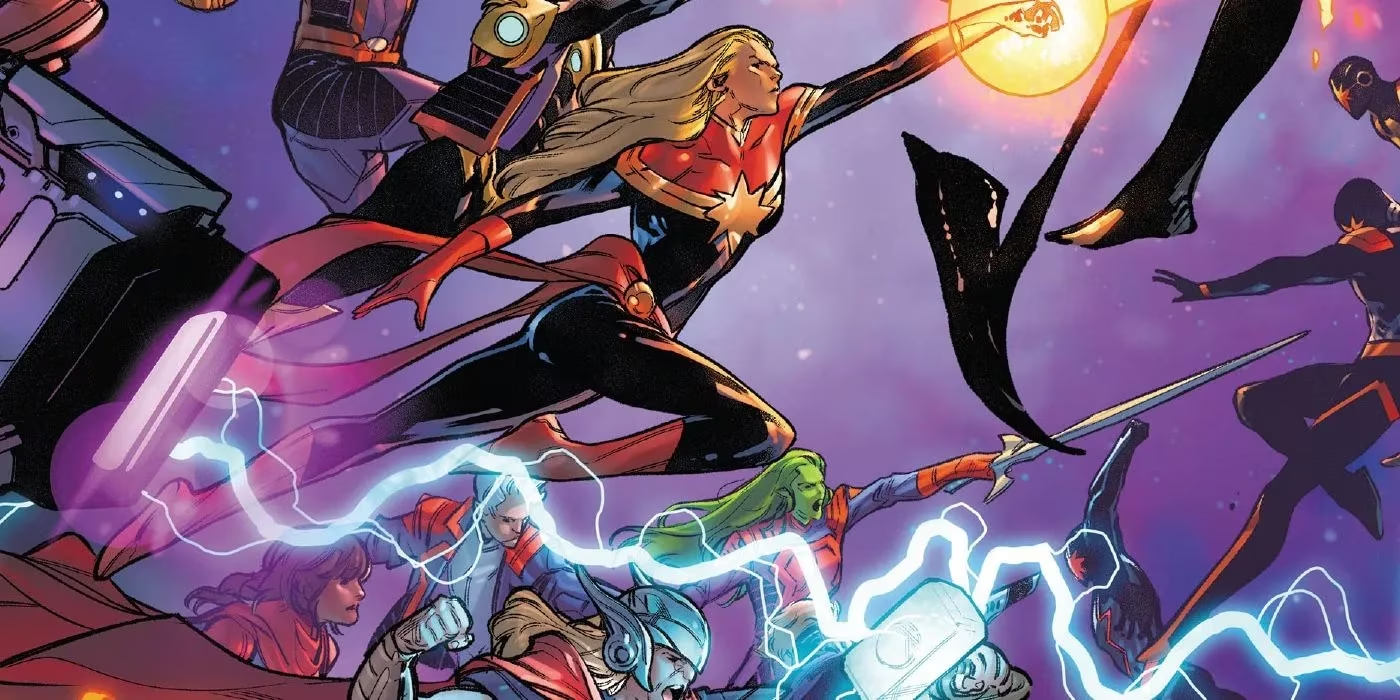
The 'Last of the Marvels' storyline is basically a family reunion, if your family included cosmic warriors, black suits, and a villain with a god complex. The Vox Supreme has been snatching previous Marvels—Carol Danvers, Monica Rambeau (Spectrum), Ms. Marvel, and others—and stuffing them into black suits to do his bidding. Not exactly a fun spa weekend. In the previous issue, Carol breaks free by creating a duplicate of herself: a being of pure energy who looks uncannily like her Binary persona. She then goes full jailbreak, freeing Vox’s other prisoners. By Captain Marvel #36, the united Marvels are ready for the final showdown, joined by the Avengers and the Guardians of the Galaxy.
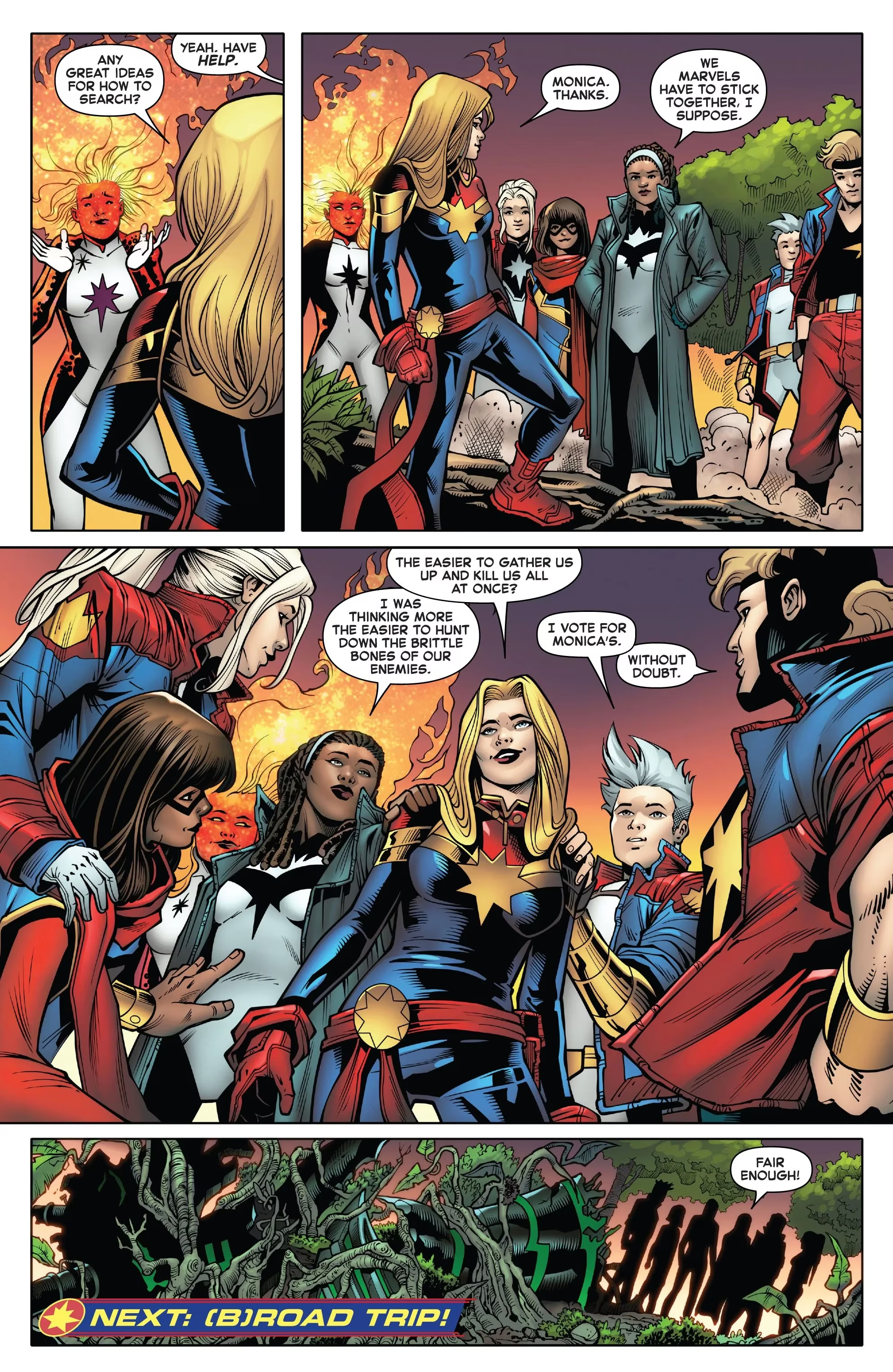
Vox Supreme, being a villain, monologues. He declares he plans to take the new Binary for himself. Moments later, she vaporizes him with an enormous blast of energy. So much for that plan. Captain Marvel, enraged over Vox’s desecration of Mar-Vell’s memory, tells him that she and the other Marvels are more than the Kree DNA in their bodies. After the dust settles, she assures the Avengers and Guardians that she will clean up Vox’s mess. The other Marvels tell her they will stick together, because there is strength in numbers—and also because cosmic-level threats are not a solo sport.
Why This Makes Marvel’s Legacy Case
DC Comics has legacy heroes coming out of its ears. The Flash, Green Lantern, and a dozen other mantles have been passed around like a talking stick at a very intense therapy retreat. Marvel, on the other hand, is not as famous for legacy heroes. Iron Man and Captain America have had replacements, but the publisher usually circles back to Tony Stark and Steve Rogers. The concept never stuck at Marvel the way it did at DC—but the various Captain Marvels through time challenge that notion.
Like most legacy heroes, the original Captain Marvel traces his roots back to comics’ Silver Age. Since then, multiple individuals have carried the name Captain Marvel, each with similar powers and all containing elements of Kree DNA. That creates a legacy similar to DC’s Flash and Green Lantern. Each character to bear the name brought their own verve to the role. Carol Danvers, the incumbent, has established herself in the role and proven herself worthy of it. For a generation, Carol Danvers is Captain Marvel.
Marvel Comics is not known for legacy heroes, but Captain Marvel has proven that she, and her predecessors, are the company’s best rivals to the legacy heroes of DC Comics. It is not just a name. It is a relay race, and Carol is currently sprinting with the baton while also firing photon blasts.
The Legacy Hero Scorecard
| Publisher | Legacy Hero Examples | Does It Stick? |
|---|---|---|
| DC | Flash, Green Lantern | Yes, famously |
| Marvel | Captain America, Iron Man | Usually reverts to Steve and Tony |
| Marvel | Captain Marvel | Actually yes, and Captain Marvel #36 proves it |
Strength in Numbers, Snacks Optional
The other Marvels telling Carol they will stick together is the emotional core of the issue. It is not just a team-up; it is a recognition that the mantle is bigger than any one person. The Avengers and Guardians show up for the fireworks, but the Marvels are the ones who close the loop. Vox Supreme learns the hard way that kidnapping a bunch of people with the same heroic title and similar power sets is a fantastic way to build a very motivated team.
In classic comic-book fashion, the villain’s downfall is his own ego. He wants the new Binary for himself. She responds by turning him into a distant memory. It is a mic-drop moment, and Carol does not even need a literal microphone. She has energy blasts. Those are better.
Why It Still Matters in 2026
Originally published in 2022, Captain Marvel #36 remains a tidy case study in 2026. Legacy is everywhere now: multiverses, sidekicks, mantle-passing, and cinematic universes constantly rebooting themselves like a router with anxiety. In that landscape, the 'Last of the Marvels' storyline stands out because it does not treat legacy as a gimmick. It treats it as a family tree with photon powers. The issue is long since on sale in print and digital, but its argument still lands: Marvel can do legacy heroes when it bothers to try.
And for anyone keeping score, Captain Marvel’s legacy is not just about who punches the hardest. It is about who shows up when the universe is falling apart. In Captain Marvel #36, the answer is: all of them. That is a legacy worth bragging about, and Marvel finally has the receipts. Next time, she apparently gets humbled by Transformers’ Autobots—because comics are weird and wonderful.
This overview is based on commentary styles popularized by Kotaku, and it frames Captain Marvel #36’s “legacy mantle” moment like a crossover-era meta trend: when multiple characters share a title, the story stops being about one hero’s solo power fantasy and becomes about continuity, community, and the friction of shared ownership—exactly the kind of big-ensemble energy that makes Vox Supreme’s plan feel doomed the instant all the Marvels reunite.